Social Media Affiliate Marketing: How Brands Scale Social Commerce

Your fastest-growing sales team probably is not on payroll. It is thousands of creators, affiliates, and ambassadors posting from dozens of countries, each expecting accurate attribution, transparent commissions, and fast payouts. Recruiting them is marketing. Keeping them is operations.
Social media affiliate marketing has moved from a side channel to a primary revenue line, and the brands winning at it are not simply recruiting more creators.
This guide covers how the model works alongside social commerce, which platforms convert, and what breaks when a program scales past its first few hundred partners. It is written for affiliate program managers, ecommerce leads, and finance teams responsible for commission operations.
Key Takeaways
- Separate affiliate, influencer, and social commerce models to choose the right contract and payment structure for each partner.
- Concentrate effort on platforms with native checkout to shorten the path from content to conversion.
- Set commission terms creators can verify so attribution disputes do not consume your program team.
- Pay creator commissions quickly and globally to protect partner retention and program growth.
- Track partner churn beside revenue so payout performance becomes an operational metric.
What Is Social Media Affiliate Marketing?
Social media affiliate marketing is a performance model where creators earn a commission for sales they drive through trackable links, codes, or in-app storefronts on social platforms. The brand pays only when a defined action occurs, usually a purchase.
- Affiliate links and codes. A unique link or discount code identifies each creator as the source of a sale.
- Tracking. Platform pixels, cookies, or native shop attribution connect the click to a completed order.
- Commissions. The creator earns a percentage of sale value or a flat amount per conversion.
- Payout. The brand or network disburses earned commissions, often across many countries and currencies.
The first three steps get most of the attention. The fourth is where programs quietly succeed or fail.
What Is Social Commerce?
Social commerce is the sale of products directly inside social platforms, without sending the shopper to an external site. The transaction happens in-app.
It covers shoppable posts and video, product tagging, live shopping, creator storefronts, and native checkout. What separates it from traditional ecommerce is context: discovery, recommendation, and purchase collapse into a single moment inside a feed the shopper already trusts.
Social commerce is no longer niche. eMarketer reports that US social commerce sales will surpass $100 billion in 2026, an 18% year-over-year increase, accounting for roughly 8.9% of total US retail ecommerce.
McKinsey’s 2026 State of Social Commerce Report puts US creator economy revenue at $20.6 billion, and finds that brands combining influencer and AI personalization strategies report 63% higher return on ad spend than those running influencer programs alone.
Social Commerce vs Affiliate Marketing vs Influencer Marketing
These terms get used interchangeably, and that confusion produces badly structured partner contracts. They are distinct models with different risk profiles and payment mechanics.
| Model | How partners are paid | Where the sale happens | Primary risk to brand |
| Affiliate marketing | Commission per conversion | Brand site or app | Attribution accuracy |
| Influencer marketing | Flat fee per post or campaign | Anywhere, often untracked | Paying for reach that does not convert |
| Social commerce | Platform fees, plus creator commission | Inside the social platform | Platform dependency and data access |
| Social selling | Salary, commission, or both | Relationship-led, off-platform | Long sales cycles, harder attribution |
In practice, these models increasingly overlap. A creator posting a tagged product in a TikTok Shop video is doing influencer marketing, affiliate marketing, and social commerce simultaneously. The distinction that matters operationally is how that person gets paid, and on what evidence.
Where Social Commerce and Affiliate Marketing Converge

Native shopping features turned affiliate content from a referral mechanism into a checkout mechanism. Each platform handles this differently, and that shapes where your program should invest.
TikTok Shop
TikTok Shop pairs short-form video with in-app checkout and an affiliate marketplace where creators select products and earn commission automatically. It has become the clearest example of creator-driven commerce operating at volume.
It also sets the expectation. Creators earning through TikTok Shop grow accustomed to frequent, predictable payouts and carry that standard to every other brand they work with. A program running 60-day commission cycles competes directly against that experience.
Instagram combines product tags, Shops, Reels, and creator storefronts, with strength in visual discovery and established creator relationships.
Because partnerships here begin as relationships rather than marketplace transactions, terms get negotiated individually. Document them carefully. Inconsistent rates across a roster become a retention problem the moment partners compare notes.
YouTube Shopping
YouTube Shopping lets creators tag products in long-form video, Shorts, and live streams. Review and tutorial content keeps converting months after publication, making YouTube the strongest platform for compounding affiliate revenue rather than launch spikes.
That changes the payout math. A single video can generate commissions for years, so partners expect accurate lifetime attribution and reliable ongoing payment, not a one-time settlement.
Pinterest sits unusually close to purchase intent because users arrive planning buys rather than browsing socially. Product Pins perform well in home, beauty, fashion, and wedding categories, with a long discovery tail that keeps driving conversions after posting.
Facebook and LinkedIn
Facebook Shops and Groups remain effective for community-driven selling, where trust builds inside an established community rather than through a feed algorithm. LinkedIn serves a different function: B2B partner and referral programs where the conversion is a qualified lead rather than a cart, and where payouts are larger, less frequent, and often contractual.
Despite their differences, they all share one characteristic. The platform owns discovery and checkout. The brand owns the relationship with the creator, and that relationship runs on commission terms and payment reliability.
Why Brands Invest, and What Creators Expect in Return
Brands invest for several reasons beyond paying only for performance.
- Variable acquisition cost. Commission spend flexes with revenue instead of committing budget ahead of performance, which protects margin in soft quarters.
- Distributed content production. Partners generate a continuous library of product content at a fraction of in-house or agency cost.
- Merchandising velocity. Creator programs surface which products move, in which markets, faster than traditional retail testing cycles.
- Diversified acquisition. Revenue spreads across thousands of partner audiences rather than concentrating in a few ad platforms.
- Reduced paid media dependence. Every point of revenue shifted from auction-based media to performance partnerships lowers exposure to rising ad costs and signal loss.
What gets less attention is the other side of the deal. Creators are running businesses, and they allocate their limited content slots to the brands that treat them well. They expect competitive and transparent commission rates, attribution they can verify in a dashboard, clear terms that do not change without notice, and payment that arrives fast and in a form they can use.
Your affiliates are not entries in a commission file. They are business owners deciding each month which brands are worth featuring.
Building and Scaling a Social Affiliate Program

A social affiliate program is an operating system, not a campaign. These steps hold across categories.
- Define partner fit before recruiting. Identify the creator profile, audience, and content style that matches your product. Broad recruitment produces volume without conversion.
- Set a commission structure that survives scale. Model rates against margin and lifetime value, including tiered rates that reward top performers without eroding profitability.
- Recruit deliberately. Source from existing customers and category creators. Customers who already buy convert best as affiliates.
- Equip creators to sell. Provide product information, approved claims, disclosure guidance, and creative direction. Ambiguity produces compliance risk.
- Build attribution you can defend. Creators disengage fast when they suspect sales are going untracked. Invest in tracking before scaling recruitment.
- Operationalize payouts. Decide payment frequency, methods, currencies, and thresholds before you onboard hundreds of partners, not after.
- Analyze and reinvest. Identify the content formats and partners producing durable revenue, then concentrate spend there. Learn more about how to build an affiliate network that scales past your first cohort.
Steps one through five determine whether creators join. Step six determines whether they stay.
Where Social Affiliate Programs Break at Scale
Success creates its own operational burden. The systems that work for an emerging creator program rarely survive once thousands of partners expect accurate, on-time payments around the world.
Most programs do not notice the transition until something breaks. The failure points are predictable.
- Commission complexity. Tiered rates, bonuses, and clawbacks multiply until nobody can explain a partner’s balance without opening three systems.
- International payout mechanics. Each market brings different rails, banking norms, and settlement timelines. What works in the US fails quietly in Brazil or Indonesia.
- Currency conversion. Partners need to understand what rate was applied. Undisclosed FX spread reads as a shortfall, and shortfalls read as bad faith.
- Tax documentation. Collecting and validating tax forms across jurisdictions becomes a finance workload that grows with partner count.
- Payout preference fragmentation. Bank transfer, virtual card, and mobile wallet each require separate vendor relationships when handled individually.
- Reconciliation. Matching thousands of commission calculations against thousands of disbursements by hand produces errors, and every error becomes a support ticket.
- Creator support load. Payment questions become the largest category of partner inquiries, consuming the team that should be recruiting.
None of these are marketing problems. They are operations problems, and they arrive exactly when the program starts working.
Affiliate Payouts at Scale: The Payment Experience Is the Creator Experience
Recruiting is where programs spend their attention. Payment is where they lose their partners.
The operational friction is consistent.
- Delayed payouts. Creators operating as small businesses feel a 30- or 60-day commission cycle as a cash flow problem, and they shift attention to brands that pay faster.
- Limited payout methods. A single payment method excludes creators without traditional banking access. The World Bank reports that 1.4 billion adults worldwide remain unbanked or underbanked.
- Opaque currency conversion. When a creator receives less than expected because of an undisclosed FX spread, trust erodes immediately.
- Fragmented compliance. Tax documentation, KYC, KYB, and reporting handled separately per region consume finance and program staff.
- Manual reconciliation. Commission files processed by hand introduce errors that turn into disputes.
Payment is not administrative overhead. It is a retention lever for the partners driving your revenue.
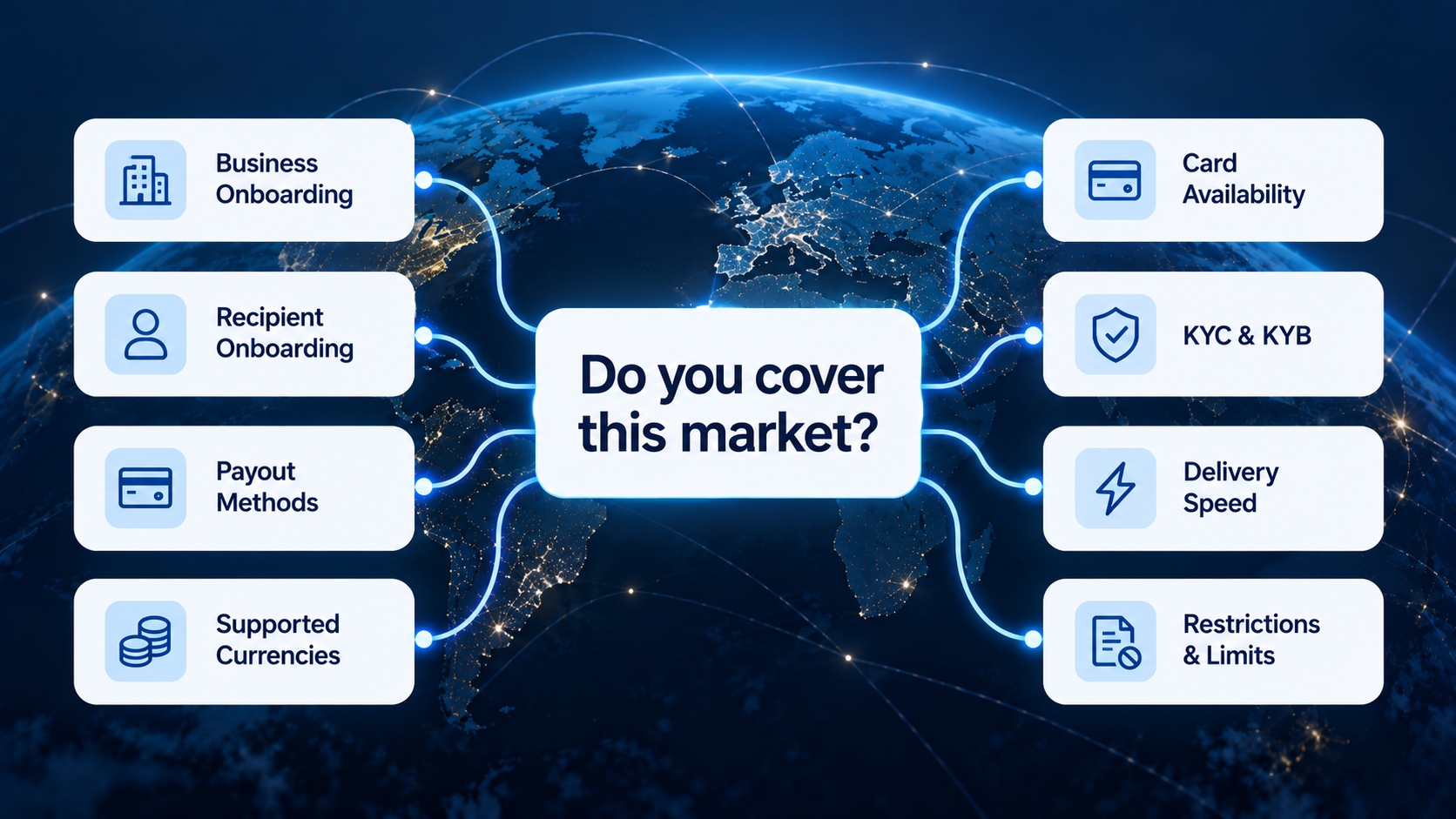
The solution is to consolidate payout operations. As creator programs expand globally, companies are moving away from stitched-together payout providers toward modern global payouts orchestration: one integration, one compliance workflow, and intelligent routing across payment methods and regions. Orchestration treats payouts as a control layer rather than a series of vendor relationships, which is what allows a program to enter a new market without rebuilding how it pays people.
In practice, that means a single integration reaching 210+ countries and territories in 80+ currencies, so a brand can pay creators in local currency using the method each one prefers, including virtual cards, bank transfer, and mobile wallets.
PayQuicker’s intelligent routing engines evaluate speed, cost, currency, and regional requirements in real time, and its partnership with dLocal extends payout access across hundreds of local payment methods. Compliance, KYC, and KYB are centralized instead of repeated per corridor.
Fast, transparent affiliate and influencer payouts are what keep a program’s best partners active, and global affiliates deserve local payouts in the currency and method they actually use.
Mistakes to Avoid and What Comes Next
The most common program failures are operational, not creative.
- Weak FTC disclosure governance. Disclosure is the brand’s compliance exposure, not just the creator’s. Build requirements into onboarding and audit them.
- Recruiting for volume over fit. Thousands of inactive partners create administrative load without revenue, and dilute the support your productive creators need.
- Ignoring attribution disputes. Unresolved tracking complaints are the leading cause of quiet creator churn. Partners rarely complain twice; they simply stop posting.
- Mismatching products to partner audiences. Poor placements convert badly and damage creator credibility, ending relationships faster than a low commission rate.
- Treating payouts as a finance afterthought. Slow or failed payments undo recruitment spend you already made.

The industry is moving in one direction. Shoppable video keeps taking share, micro-creators convert better than large accounts, and first-party attribution is becoming necessary as third-party signals degrade. Each pushes more partners, in more countries, into programs that must pay them accurately and quickly. The affiliate payout trends reshaping 2026 point the same direction.
The next generation of affiliate programs will not compete on commission rates alone. They will compete on the creator experience, from onboarding and attribution to how quickly earnings arrive.
Creator commerce has turned payments into a competitive advantage. The brands that make it easy to earn, easy to understand, and easy to get paid will keep attracting the partners who drive their growth. Everyone else will keep recruiting replacements.
Book a demo to see how modern global payouts orchestration can pay creator commissions faster, in more currencies, and with less operational overhead at scale.
FAQs
How many creators can one person realistically manage?
It depends on how automated your program is. A manager using modern tracking and payout tools can oversee hundreds of active creators, while manual spreadsheets often become difficult well before that. Administrative work usually becomes the limiting factor before recruitment does.
Should affiliate commissions vary by creator?
Yes, if the differences are based on measurable performance or strategic value. Transparent criteria such as sales volume, product category, or exclusive partnerships help prevent disputes. Document commission rules before creators join the program.
What metrics matter beyond affiliate revenue?
Track creator retention, time to first sale, payout speed, and attribution disputes alongside revenue. These metrics reveal operational issues before they reduce program growth. Strong programs measure partner health as well as sales performance.
When should brands replace manual payout processes?
Replace manual processes when payment reviews, reconciliation, or support requests begin slowing program growth. Waiting until errors become common makes the transition more disruptive. Automation works best before operations become a bottleneck.
Can international creators be paid in their local currency?
Yes, if your payout infrastructure supports local currencies and regional payment methods. Paying creators in their preferred currency improves transparency and reduces confusion about exchange rates. It also removes friction for partners in new markets.