Frictionless Global Payments: Why Flex Beats Stablecoins

Stablecoins promised a faster way to move money across borders. For most global enterprises, that promise has fallen short. Between changing regulations, custody risks, and volatile asset structures, what began as innovation often creates more complexity than speed.
Modern fiat-based payout orchestration addresses this issue. These stablecoin payment alternatives deliver instant, compliant global payouts without crypto exposure or licensing uncertainty.
According to The Financial Brand, enterprises are accelerating their investments in real-time, fiat-payout systems that strike a balance between speed and regulatory trust. With PayQuicker global payouts Orchestration, your business can securely and transparently send payments to 210 countries and territories in more than 60 currencies. No conversions. No crypto wallets. Just faster, compliant payouts built for global growth.
Key Takeaways
- Adopt fiat orchestration to replace unstable crypto rails, ensuring compliant, real-time global payouts.
- Automate mass payouts with APIs that eliminate manual work and provide instant access to funds.
- Strengthen compliance controls to reduce cross-border risk and meet evolving regulatory standards.
- Leverage stablecoin payment alternatives to gain speed and reach, without volatility or custody complexity.
- Future-proof your global payouts by partnering with PayQuicker to scale confidently and stay ahead of regulations.
Understanding Stablecoin Payment Alternatives
Stablecoins were created to speed cross-border transactions, but for most enterprises, they have added complexity rather than removing it. Each payout introduces conversion steps, custodial oversight, and evolving regulatory requirements, stretching compliance teams.
Modern stablecoin alternative payment solutions solve that problem by orchestrating fiat-based payouts. These platforms match stablecoin speed and reach while operating fully within regulated financial networks.
By using trusted fiat rails, they eliminate volatility, custody risk, and uncertainty around asset classification.
Platforms like Flex Wallet – Stablecoin Alternative give businesses a simpler way to pay global networks of contractors, affiliates, and distributors without handling crypto. The result is predictable, compliant, and instant payments that move globally while staying within established banking systems.
Next, we’ll look at why more enterprises are deciding that stablecoins no longer meet their payout needs.
Why Businesses Are Moving Beyond Stablecoins
As payout volumes increase, the limits of stablecoin systems have become more visible. Each transfer raises new compliance challenges for stablecoins across jurisdictions. Custody models introduce crypto custody risk, while asset volatility complicates reconciliation and audit accuracy.
More enterprises are shifting toward a compliance-ready, transparent payment infrastructure that delivers speed without added exposure.
Finextra’s 2025 regulatory analysis highlights how rising demands around data protection, strong customer authentication, and real-time oversight are pushing global payers to rely on licensed, auditable payment networks rather than high-variance alternatives. Forbes fintech coverage echoes this shift, noting that organizations increasingly favor rails that provide predictability, liquidity control, and clear auditability.
By adopting a modern payments orchestration layer, organizations gain global reach and instant settlement while avoiding the operational and regulatory burdens of crypto.
Unlike single-rail stablecoin systems that depend on volatile assets, PayQuicker’s orchestration framework uses multi-rail fiat connectivity to maintain both speed and compliance at scale.
What comes next? Businesses want to know how these alternatives perform in real-world payout environments.
Where Stablecoin Alternatives Excel in Real Use Cases
Global enterprises, affiliate programs, gig platforms, and clinical trial sponsors all face the same problem: sending frequent, compliant payments to thousands of recipients in multiple currencies. Stablecoins can appear efficient, but often add friction when recipients prefer local accounts or prepaid cards.
Fiat-based global payouts address that challenge directly. With mass payout capabilities, organizations can send instant, local-currency payments to gig workers, affiliates, or study participants from one orchestration platform.
Why are stablecoin alternatives better for mass payouts? They offer flexibility. Cross-border success requires multiple payout options, automated compliance, and seamless API integration.
PayQuicker leads this space with modern mass payout technology that combines faster delivery, transparent reporting, and a consistent experience for every payee. Unlike single-rail systems, it integrates multiple fiat rails and payout methods into a single, compliant, scalable orchestration model.
Are fiat-based payout systems faster than stablecoins? Yes. They deliver instant or same-day settlement without conversion delays or custodial friction, giving both payers and payees immediate clarity and access.
For example, affiliate programs can send instant local-currency commissions to global influencers without manual conversions. Gig platforms can fund workers’ cards or mobile wallets instantly after each completed task. Clinical trial sponsors can disburse participant stipends securely and compliantly across multiple regions. Each use case benefits from transparent reporting and faster access to earnings.
Next, we’ll explore how these capabilities translate into measurable compliance gains.
Key Features of Modern Payout Orchestration Platforms

Enterprises managing global payouts need infrastructure that scales, handles complexity, and ensures compliance in real time. A modern payout orchestration platform brings those capabilities together in one connected environment.
At its core, orchestration connects multiple payout rails, currencies, and partners through a single secure operating layer. It supports multi-currency reach, compliance automation, and API-driven mass payouts that remove manual effort and reduce operational risk.
Using API Mass Payouts, businesses can embed payment flows directly into their existing systems. Each payout follows consistent rules for compliance, reporting, and approval, without adding friction or delay.
What Makes a Modern Payouts Orchestration Platform Stand Out?
According to Forbes Fintech and PayQuicker product documentation, leading solutions automate verification, route payments intelligently, and provide real-time visibility across all currencies. This blend of speed, transparency, and control enables finance and operations teams to scale global payouts efficiently through one system.
Key Benefits of Modern Payout Orchestration
- Multi-currency reach: Pay in 60+ currencies without establishing new banking relationships.
- API mass payouts: Embed global payouts directly into your platform workflows.
- Compliance automation: Replace manual AML and KYC reviews with built-in verification.
- Instant settlement: Deliver funds within seconds using real-time payment rails.
- Centralized visibility: Track every payout in one secure global dashboard.
Next, we’ll see how these orchestration capabilities work in real-world payout scenarios.
How Stablecoin Alternatives Work in Practice
Modern fiat-based global payout rails replace crypto mechanisms while maintaining the instant speed that enterprises expect. Instead of transferring tokens between wallets, orchestration platforms move funds through regulated financial networks, which already support high-speed settlement.
Businesses can initiate payments through bank transfers, real-time payment systems (RTP), prepaid cards, or digital wallets, all connected within a single real-time ecosystem. The platform automatically selects the most efficient route based on destination country, currency, and payout preference.
In a stablecoin system, funds move between digital wallets before converting back to fiat, often requiring separate custody, reconciliation, and licensing oversight.
In a modern payout orchestration model, funds travel through trusted fiat rails that already support instant settlement and compliance. This allows businesses to send and confirm payments in real time without handling crypto assets or managing additional wallets.
How Do Fiat-Based Rails Outperform Crypto Systems?
JP Morgan reports that modern RTP and card networks now settle transactions within seconds, giving both payer and payee immediate confirmation. PayQuicker applies this orchestration model, connecting multiple fiat rails, each regulated and optimized for local delivery.
With Global Mass Payouts, organizations can fund recipients in their preferred currency through trusted banking partners without conversion steps or crypto custody concerns.
Next, we’ll explore how this structure simplifies compliance across jurisdictions and industries.
Simplifying Compliance and Regulation

Every enterprise operating across borders must navigate a growing web of regulations. Regional differences in anti-money laundering (AML), know-your-customer (KYC), and data protection rules make consistency difficult. A payment orchestration platform addresses this by embedding compliance controls directly into every transaction.
By automating verification and maintaining clear audit trails, orchestration platforms simplify oversight while improving accuracy. Every payout record has clear data points for origin, recipient, and route, providing regulators with full transparency.
How Does Orchestration Improve Regulatory Clarity?
Finextra highlights that fintechs adopting structured compliance frameworks have reduced reporting delays and improved regulator confidence. PayQuicker aligns its payout systems with FATF, GDPR, and leading financial authority standards to ensure global consistency.
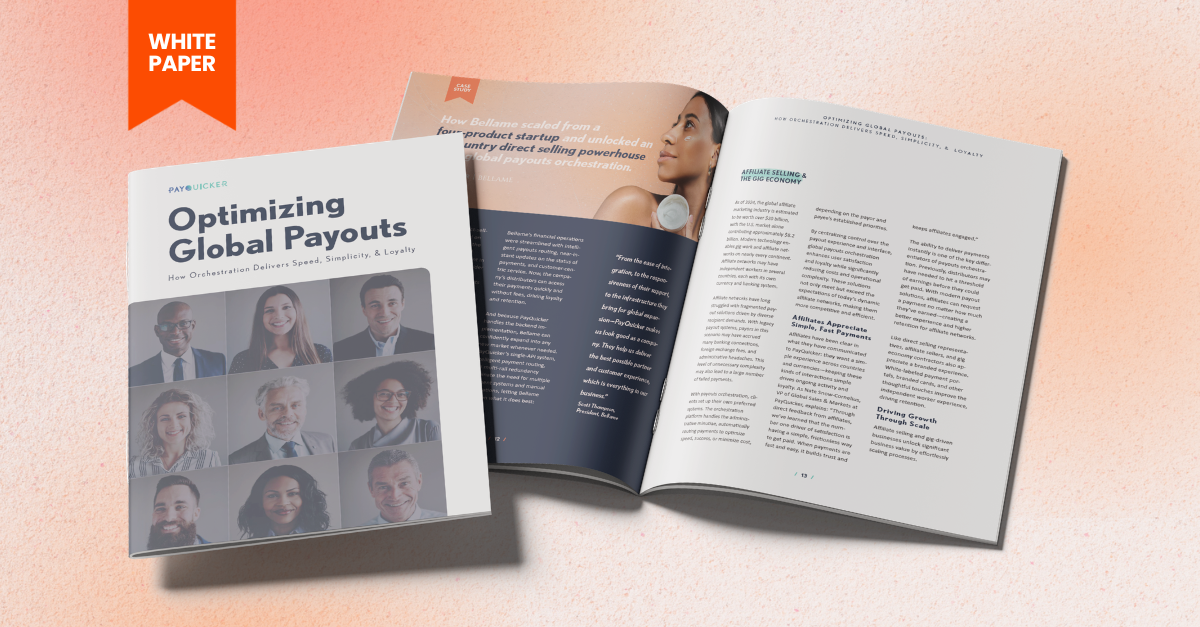
The Global Payouts Orchestration – Driving Payments 3.0 model demonstrates how automation and auditability minimize risk while enabling faster, cleaner payout execution.
This structure turns compliance from a reactive obligation into a strategic advantage. By centralizing KYC and transaction data, orchestration platforms improve communication with regulators and strengthen internal governance. Enterprises can audit payouts more quickly, respond to inquiries with confidence, and expand across regions without increasing risk exposure.
Next, we’ll look at how secure data handling and privacy safeguards further strengthen these platforms.
Protecting Data Privacy and Security in Fiat Payouts
Trust is the foundation of every payment relationship. Enterprises managing sensitive payee data must ensure that every transaction aligns with global privacy and security regulations. Modern payout orchestration platforms meet these standards by combining GDPR, HIPAA, and enterprise-grade safeguards within a single secure architecture.
By encrypting data in transit and at rest, these platforms protect sensitive payment and identity information. Access controls include multi-factor authentication, role-based permissions, and regular audits aligned with ISO and SOC standards.
What Makes Secure Global Payouts Different?
Forbes and IBM’s Data Breach Reports highlight that proactive encryption and process automation are key to reducing both exposure and response time. PayQuicker applies these principles across its architecture to ensure continuous monitoring and compliance oversight throughout every transaction.
The Payments Orchestration Layer model strengthens this security posture through centralized data governance and transparent visibility. Enterprises gain confidence knowing that each payout is protected from initiation to completion.
Up next, we examine how this secure architecture scales across PayQuicker’s global payouts network.
How PayQuicker Delivers Modern Global Payouts at Scale
Global enterprises need systems that deliver speed, compliance, and reach in a single connected model. PayQuicker’s modern payout orchestration achieves this through a verified network spanning over 210 countries and territories in 60 currencies for the Flex solution
This global ecosystem enables businesses to fund bank accounts, cards, or wallets instantly, without managing multiple vendors or digital conversions. Every transfer introduces new compliance challenges across jurisdictions.
Why Choose Fiat Alternatives to Stablecoin Payments?
Stablecoins may promise fast transfers, but they introduce volatility and regulatory uncertainty. Fiat orchestration offers the same real-time speed while providing transparency, stability, and built-in oversight. PayQuicker connects enterprises to trusted banking networks that remove custody risk while maintaining operational efficiency at scale.
The global payouts orchestration architecture demonstrates how enterprises can simplify disbursements, reduce administrative overhead, and maintain complete regulatory alignment without using digital assets.
The following section explores the trends shaping this next generation of global payouts.
Trends Shaping the Future of Global Payouts

Enterprise payout systems are entering a new phase, often called Payments 3.0, an evolution built on embedded finance, automation, and real-time connectivity. This stage focuses on integrating payments directly into business ecosystems while maintaining complete regulatory control.
Payments 3.0 is not about replacing existing systems, but integrating them intelligently. Orchestration connects legacy banking, real-time rails, and embedded finance APIs into one cohesive experience. Enterprises adopting this approach today are building the infrastructure that will define tomorrow’s global commerce.
What Defines Payments 3.0 for Enterprises?
Payments 3.0 combines automation, transparency, and scalability into one connected experience. Organizations can issue payments instantly, manage compliance centrally, and align finance operations with broader business systems.
The Payments 3.0 ecosystem represents this shift. It delivers real-time, API-driven payouts that operate as part of a larger embedded finance network.
Up next, we will cover practical steps for transitioning from stablecoins to modern fiat-based payout models.
Best Practices for Transitioning from Stablecoins to Fiat Solutions
Switching from stablecoins to regulated payout systems is not just a compliance upgrade. It is a strategic move toward greater reliability, scalability, and stronger control over global transactions. The right migration plan reduces disruption and builds lasting efficiency and trust.
How Can Enterprises Transition Smoothly?
- Assess your payout mix. Identify which transactions rely on crypto rails and which can shift to fiat orchestration.
- Review regulatory risk. Map exposure across currencies and jurisdictions to pinpoint where volatility or custody issues cause friction.
- Select a trusted partner. Work with a provider that offers transparent reporting, extensive coverage, and API connectivity for compliant payout migration.
Insights from Circle and Thunes show that successful transitions start with alignment between finance, compliance, and technology teams. PayQuicker’s orchestration model supports this coordination by combining multi-rail connectivity with built-in compliance automation.
Transition Checklist for Global Enterprises
- Map existing stablecoin payout flows and identify points of friction or delay.
- Evaluate regulatory exposure and reporting gaps by region.
- Integrate API Mass Payouts with test markets to validate speed and compliance.
- Scale rollout across additional countries with full reporting automation.
Enterprises that take a phased approach achieve smoother adoption and maintain payout continuity across every business line.
The following section highlights why a fiat-based payout network now defines the smart path forward.
The Smart Path Forward

Stablecoins helped spark innovation in cross-border payments, but innovation alone is not enough. Global enterprises now require payout systems that deliver speed and transparency without the complexity of digital assets.
PayQuicker delivers on that expectation. Its latest Flex solution delivers stablecoin-level speed and reach while maintaining the regulatory confidence enterprises demand. With access to over 210 countries and territories and more than 60 currencies, it provides organizations with the reliability and scale they need to grow securely.
The Takeaway
The future of global payouts is instant, compliant, and fiat-based. Organizations that act now can reduce risk, simplify operations, and gain a competitive edge in a rapidly changing market.
Start Your Transition to Modern Payouts
Explore the Flex Wallet – Stablecoin Alternative or learn how global payouts orchestration can power faster, seamless, compliant growth across every market.
FAQs
What are the best stablecoin payment alternatives for global enterprises?
The best stablecoin payment alternatives are fiat-based payout orchestration platforms, which move funds instantly and compliantly. In contrast to crypto rails, solutions such as PayQuicker Flex support over 210 countries and territories in more than 60 currencies without custody or volatility risks.
How does payout orchestration strengthen compliance versus stablecoins?
A payout orchestration platform automates AML, KYC, and audit checks across every transaction. Compared to crypto systems, it centralizes verification and reporting so finance teams can meet regulatory standards in real time.
Why are fiat payout solutions safer than stablecoin payments?
Fiat payout systems operate through regulated financial networks rather than tokenized assets. They use encryption, multi-factor authentication, and continuous monitoring, best practices backed by enterprise providers such as PayQuicker, to protect data and reduce fraud risk.